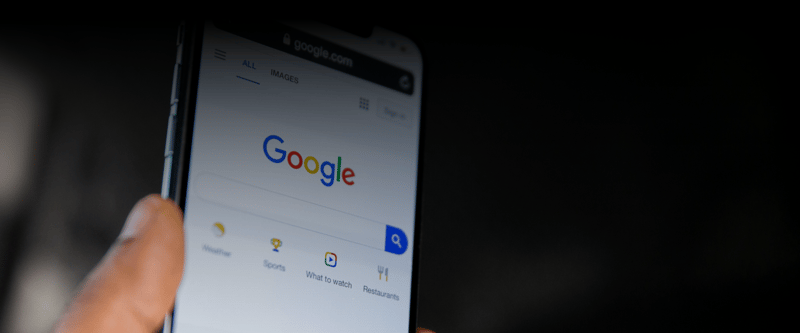
1. What is Google SGE?
Google SGE stands for Search Generative Experience – a new feature that integrates AI-generated content directly into search results. When you enter a search query, you no longer get a classic list of links but an answer block that summarises relevant information from across the web in real time. This content acts like a personal advisor, delivering results tailored to your questions – often without you having to click any further.
The benefit for users is a fast, context-based answer drawing on multiple sources. For website operators, however, it means fewer clicks and less organic traffic. That makes it all the more important that your content is relevant enough for AI inclusion to be featured in these generated answers. This changes not only how content is created but also how you need to measure and optimise its visibility.
Another aspect: SGE doesn't just output text – it can also integrate visual content such as images or product tiles. This makes the search experience more immersive and interactive – a complex challenge for classic SEO strategies. If you don't start testing and adapting now, you will lose reach in the medium term.
2. The difference between Bard and SGE
Bard is Google's AI chatbot, which operates similarly to ChatGPT and processes information independently. Unlike SGE, Bard does not appear directly in search – it is a separate tool. While Bard is designed for dialogue, SGE delivers fact-based, neutral answers that are not personalised but appear standardised for all users.
A key difference also lies in the integration: Bard is not embedded in Google search, whereas SGE is natively anchored in the search experience. SGE therefore influences search behaviour to a much greater degree. In addition, Bard is ad-free – SGE can contain paid elements. If you run SEA, you should keep a close eye on SGE in particular, because it is changing the rules of visibility.
In the long term, it is likely that both tools will converge or be used together. You can already see how Google's AI landscape is becoming interconnected – and that you need to prepare for an increasingly automated search world in which AI and user intent go hand in hand.
3. How Google's new AI search works
Visually, much stays the same – the classic search bar is still there. But beneath the surface, decisive things are happening: AI-generated answers appear directly below the search bar, highlighted in colour and designed interactively. These answers contain contextual information, summaries and even links to further sources.
An example: if you ask about the best running shoes for beginners, you get a structured answer combining product recommendations, buying criteria and tips – all without having to visit a single page. These snapshot views are increasingly replacing classic web research. For you, this means your content has to be more precise and more topic-focused than ever to be considered for AI inclusion.
Google also enables interaction through follow-up questions. Users can dig deeper or have related topics displayed. This changes the customer journey, which increasingly takes place within the Google ecosystem itself – without any obligatory detour to your website.
4. Impact on paid and organic search results
With SGE embedded in search results, the boundary between organic visibility and paid advertising is blurring. Sponsored labels are still displayed, but the clear separation between ads at the top and organic results below is no longer clear-cut. This calls for new positioning strategies.
For you as an SEA manager, this means you need to provide more context to be present in the new results areas. At the same time, competition for attention is increasing, because AI answers now occupy a large share of the visible area. SEO metrics such as CTR and visibility are shifting significantly, and familiar tools need to be rethought.
The challenge now is to design paid ads so that they blend seamlessly into the informative environment of SGE. Pure promotion without added value performs worse – what's needed is intelligent ad content oriented towards user intent.
5. Availability and visibility of SGE
Currently, SGE is only available in the US, in an experimental version. You can recognise it by the “SGE – Experimental” label within search. A launch in Europe has not yet been officially dated but is highly likely. Google is testing intensively and will iterate based on feedback.
For you, it is important to monitor the global rollout early. Use VPN tools to analyse the US search experience yourself. The sooner you understand how content is surfaced there, the faster you can adapt your own content strategy. In the future, visibility will be decided in the top third of the page – and SGE already dominates that space today.
This also applies to desktop users: classic search results are increasingly shifting “below the fold”. Anyone who doesn't appear in the AI answers is often no longer noticed. The pressure is correspondingly high for content that is structured to be understandable and relevant for AI as well.
6. Effects on SEA and Performance Max campaigns
Performance Max is becoming the central pillar of modern SEA strategies. In these campaigns, Google takes control of placement, audience and ad mix. You only supply the content – the AI decides autonomously what gets served. In a world with SGE, that is a decisive advantage, because the link between ads and generated answers is becoming ever closer.
At the same time, you lose control: classic keyword targeting now plays only a minor role. Instead, it's about signals, audience interests and content relevance. Your job is to provide multi-layered, thematically relevant input that the AI can put to good use. Anyone still betting on narrow keyword strategies is heading for a dead end.
Performance Max also lets you bundle different media formats – text, image, product feed. That is ideal for SGE, where AI also uses visual elements. You should therefore design your content to work across all formats – while remaining user-centred and high-quality.
7. Less search traffic due to direct answers?
When Google delivers answers directly in the search results, many websites lose organic traffic. Purely informational content is particularly affected – guides or comparison articles, for example. Users get their answer instantly – without clicking through. For you, this means designing your content to deliver real value beyond pure information.
Good strategies rely on interaction, depth and relevance. For example, you can offer in-depth content, tools or downloads that go beyond the plain AI text. Storytelling or first-hand reports can work too – the key is to offer something Google can't immediately reproduce in an answer box.
In the long run, the competition for visibility on Google won't get smaller – but it will get smarter. Only those who engage with the new rules of the game can stabilise their website rankings or even improve them. SGE is not a passing trend – it is the new reality. React early – or lose reach.

%20Kopie.png?width=500&height=500&name=Eckl%20Partner%20(2)%20Kopie.png)
.png?width=500&height=500&name=Eckl%20Partner%20(2).png)
-2.png?width=500&height=500&name=Eckl%20Partner%20(1)-2.png)